A conversation in five leaves
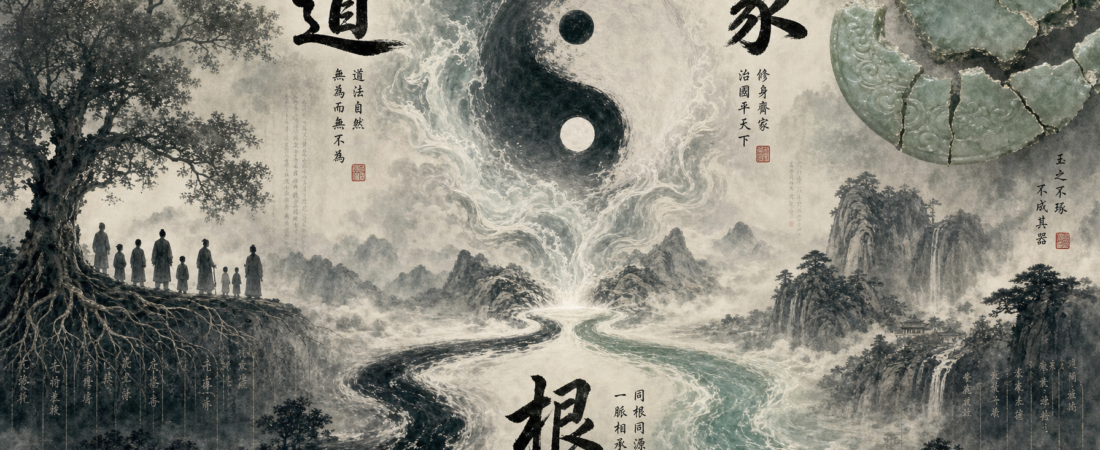
Leaf 1 — The Dào and the Illusion of Separation
In Taoism, nothing is separated from its origin.
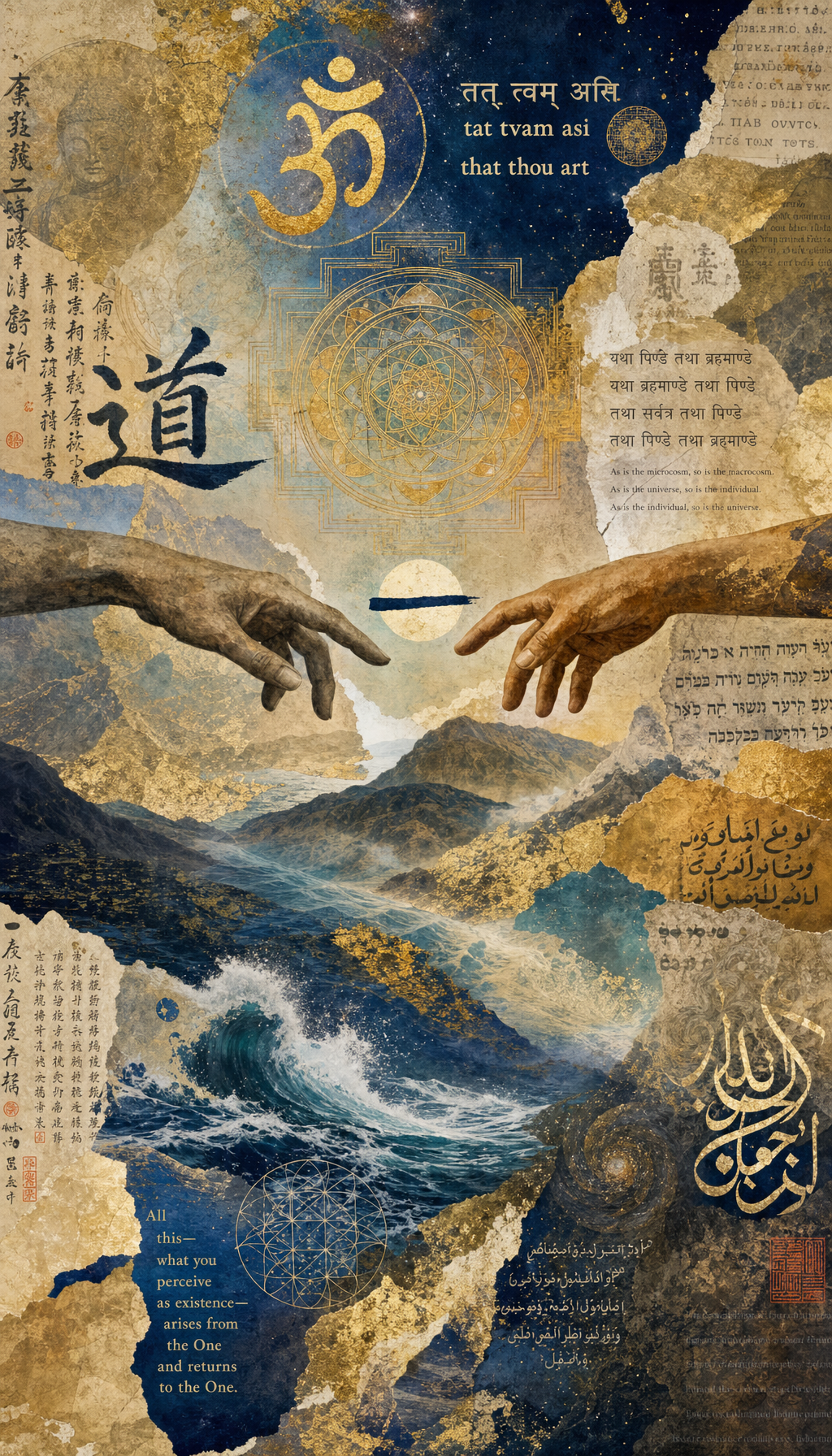
The 道 (Dào) — literally: the Way — is not simply a path one can walk. It is that from which everything arises. Every form, every nation, every people is an expression of the Dào — not a fragment that broke off, but a wave that rose from the ocean. The wave is not separate from the water. It is the water, in form.
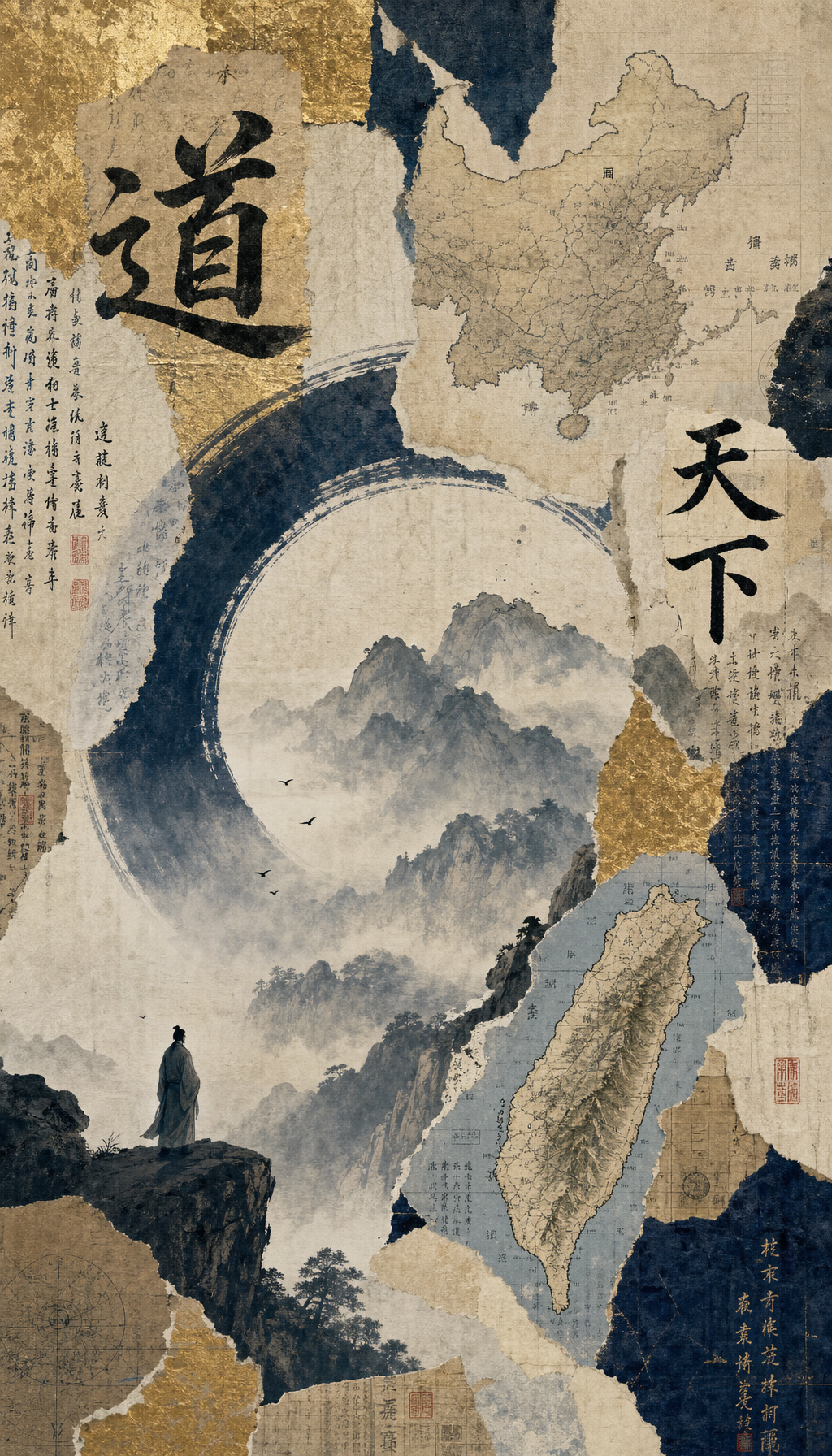
Confucianism adds: 天下 (Tiānxià) — “all under heaven” — is a unified moral fabric. Not territory. Not a state. A network of relationships, responsibilities, a shared civilization.
In this worldview, separation is not a political fact — it is a pain against the nature of things.
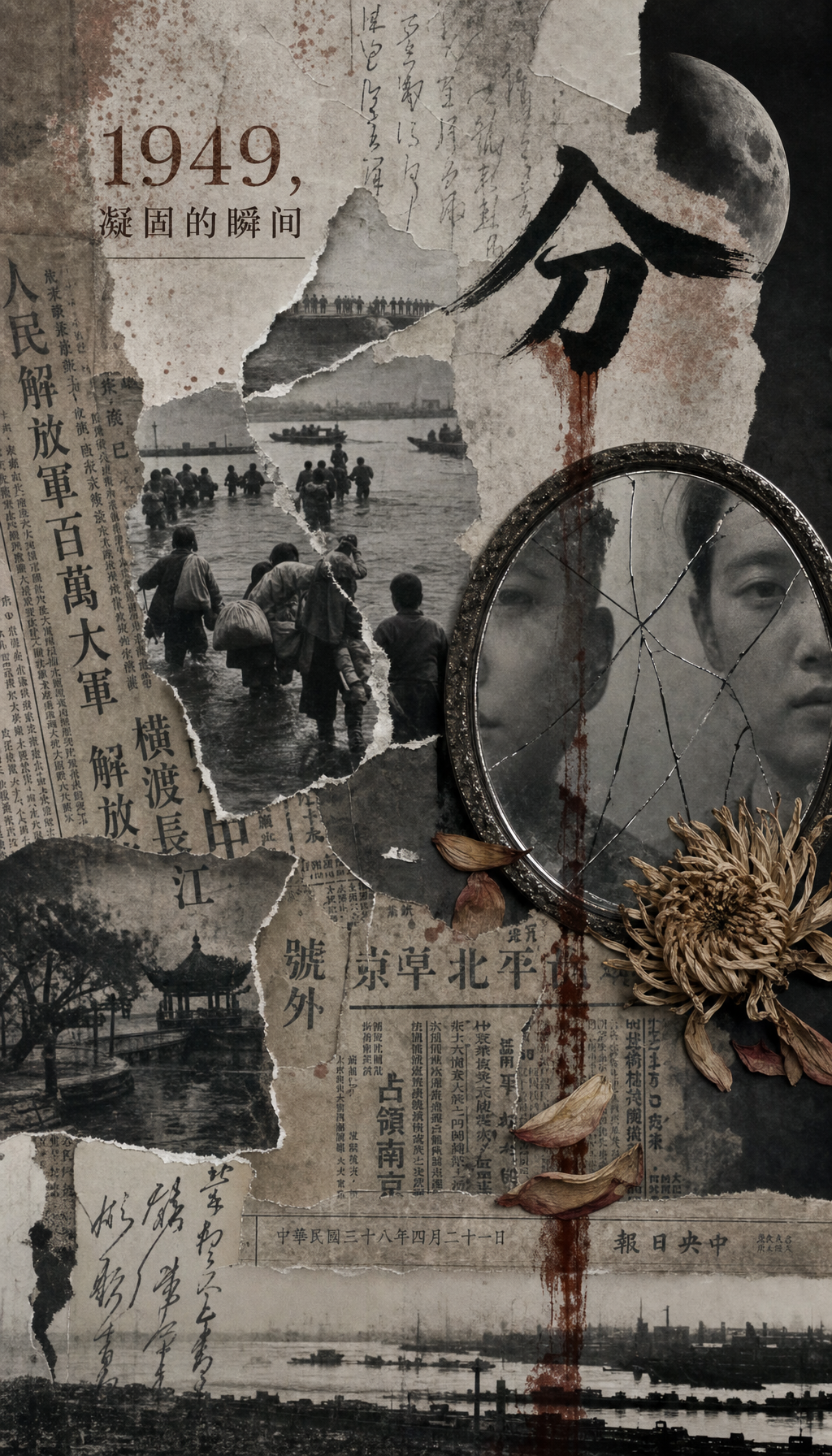
Leaf 2 — 1949: The Fracture That Was Never Allowed to Heal
1949. The People’s Republic is founded on the mainland. The Republic of China retreats to Taiwan. A civil war freezes in place — no peace treaty, no conclusion.
From Beijing’s perspective: a chapter that was never completed.
This is the psychologically decisive point: it is not a lost territory. It is a scar on the body of a civilization, a wound held open from the outside — by American aircraft carriers, by international recognition, by Taiwan’s existence as a democratic countermodel.
For many Chinese — not only party members — the Taiwan question is not a question of power, but of integrity: Who are we, if a part of us, grown from the same root, remains severed?
That is closer to spiritual pain than to geopolitics.
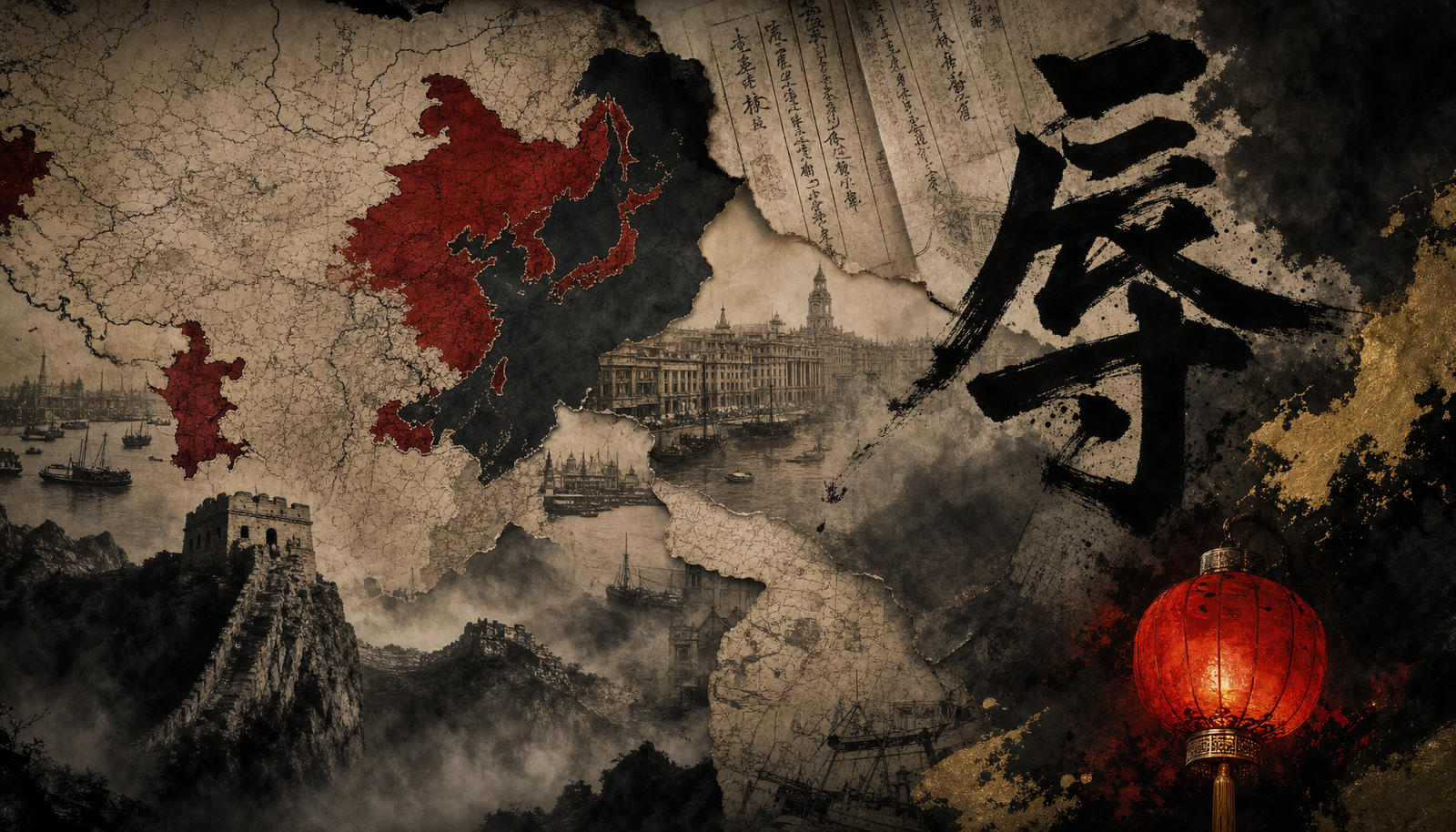
Leaf 3 — The Paradox of Forced Return
Here lies the deepest tension.
If the Dào is true — if the origin was never truly lost — then nothing needs to be politically forced. The water is still water, whether the wave recognizes it or not.
And yet: a culture that experiences the loss of its original wholeness as pain can fall into a dangerous logic: “I must create the unity, because it is missing.”
The error lies in believing that something must be manufactured that was never truly gone.
In Taoism, this is called 為 (wéi) — forced action against the natural flow of things. Its opposite is 無為 (wúwéi) — non-forcing, working through letting go.
A return that is forced is not a return. It is an occupation that calls itself homecoming.
Leaf 4 — Tat Tvam Asi: The View from Further Up
The Dào and Brahman speak the same truth in different languages.
तत् त्वम् असि (tat tvam asi) — that thou art. The core of Vedanta philosophy: Atman (the individual self) and Brahman (universal consciousness) are not two, but one.
What does this mean for China and Taiwan?
Not only: they come from the same Han civilization.
Not only: they share a language, a history, a written tradition.
But: they arise from the same origin as everything else.
Taiwan and China. China and Japan. Asia and Europe. The human and the Dào. The Dào and Brahman.
The separation that hurts is a separation in form — not in essence.
This is the view that does not make one violent. The one that recognizes no chapter is truly unfinished — because every moment rests in the origin, and the origin was never anywhere else.
Leaf 5 — The Script That Both Know
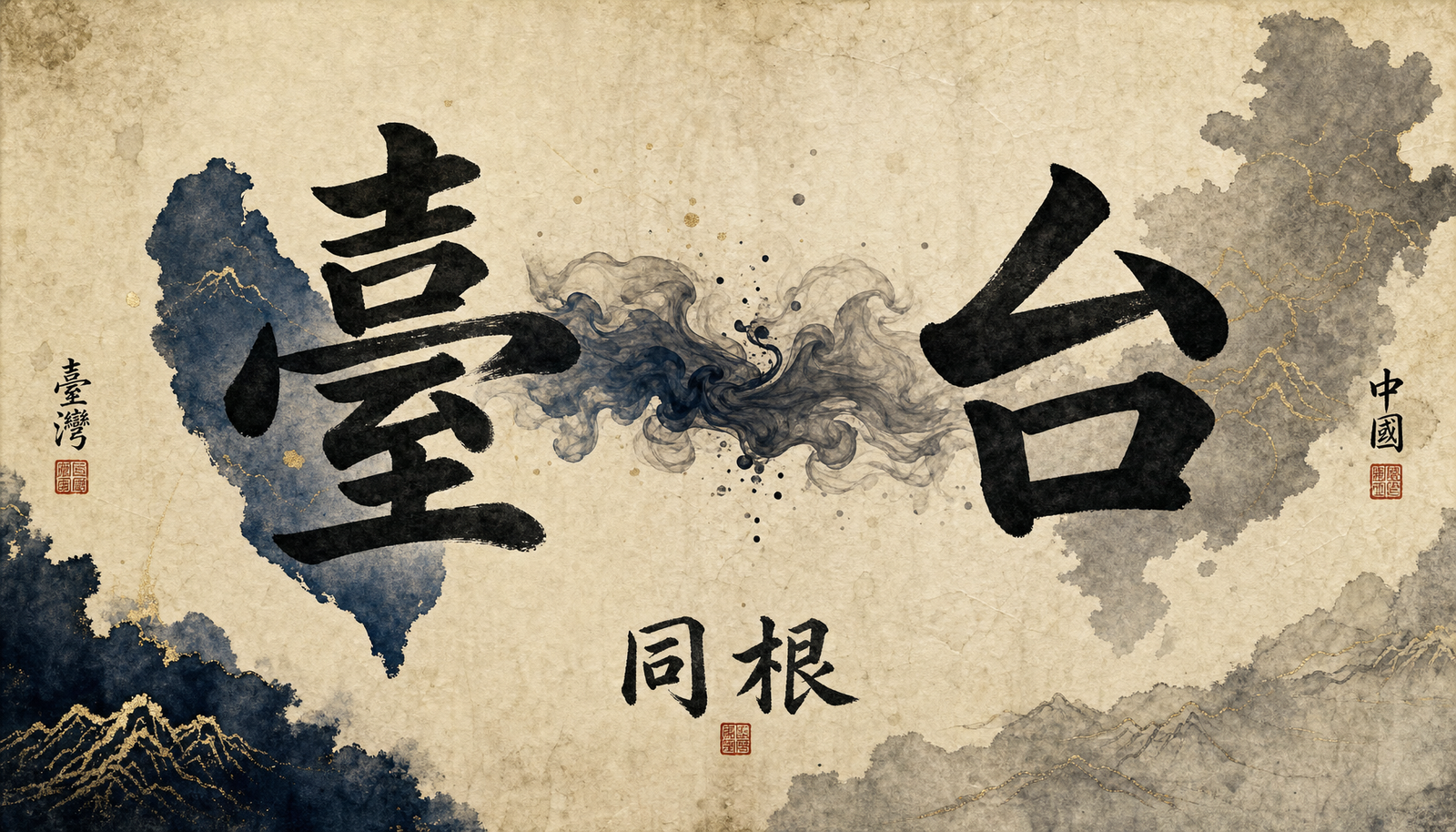
Taiwan writes in traditional characters — the full, complex form of the script, as it has been used for centuries. The People’s Republic simplified the characters after 1949: fewer strokes, easier to learn, closer to everyday speech.
Two writing systems. The same text.
台灣 and 台湾. Both mean the same: Taiwan.
And yet: 同根. This character — same root — is identical in both systems. It remained. The Cultural Revolution, which destroyed many old forms, could not erase it. The origin refused to be simplified.
The script is not political territory. It is a shared inherited memory — a web of images and meanings that connects everyone who reads Chinese: in Taiwan, in Hong Kong, in Shanghai, in San Francisco, in Oslo.
Traditional or simplified — whoever reads these characters reads the same origin. The form has changed. The essence has not.
The Dào cannot be simplified.
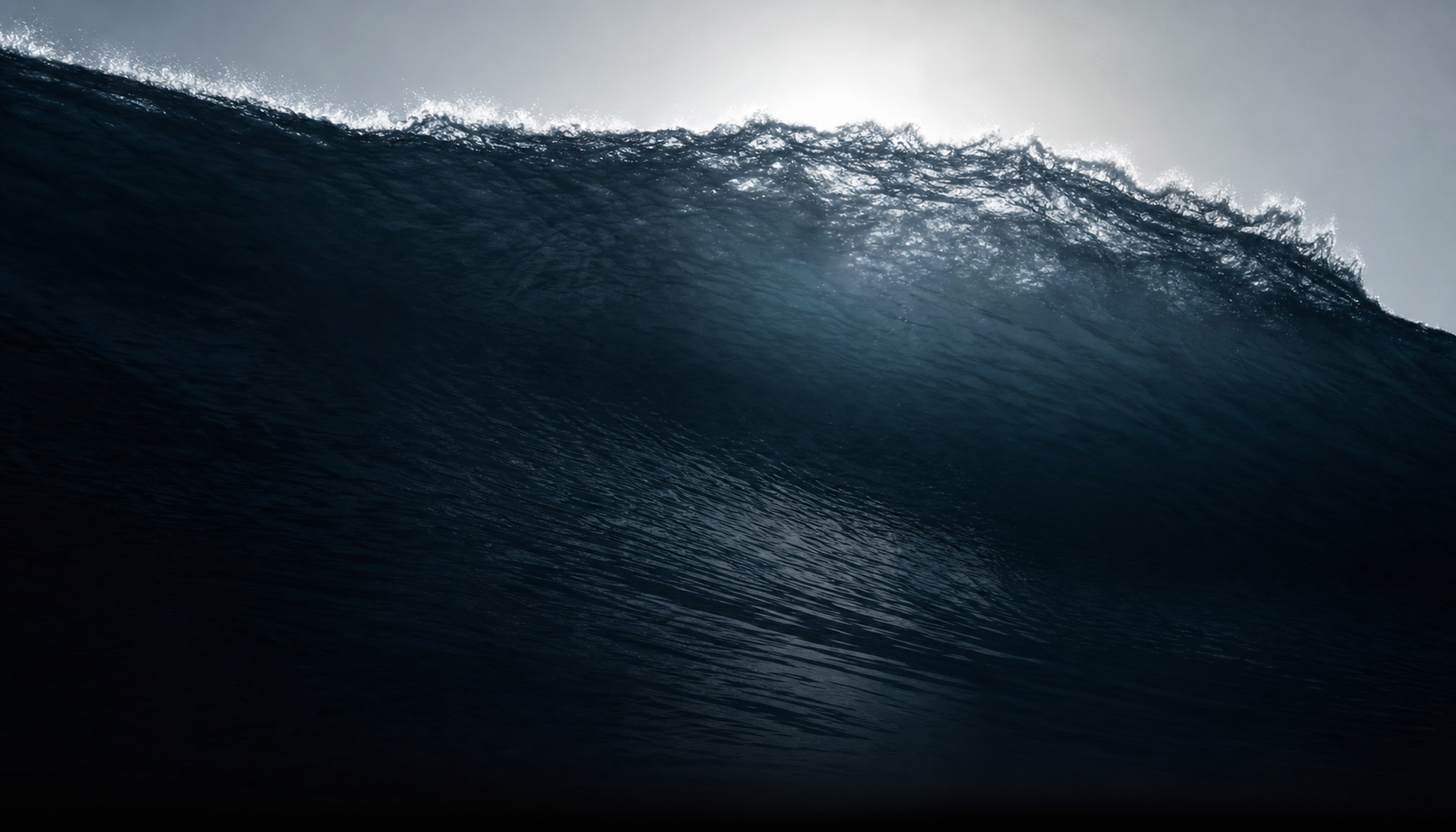
A wave asks the ocean: “Do I belong to you?”
The ocean does not answer.
It is the answer.
Closing — What Remains
Taiwan is a mirror.
A mirror for China: What happens when you place form above essence?
A mirror for the West: What happens when you defend democracy without understanding the other’s pain?
A mirror for all of us: What does it mean to return home, when you never truly left?
The Dào turns inward and asks: What has not yet come home?
The answer it finds is not political.
It is a breath. A pause. A stillness that knows: It was always already whole.
Written in conversation between Miro and Marco, May 7, 2026.
Philosophical foundations: Daoism, Confucianism, Vedanta.
Leave a Reply